!DOCTYPE html PUBLIC "-//W3C//DTD XHTML 1.0 Strict//EN" "http://www.w3.org/TR/xhtml1/DTD/xhtml1-strict.dtd"> archive-living-nour-obscur

On labels people use

Saturday, July 25, 2009

In the Irish Times of April 25th, 1998, Whoopi Goldberg was quoted as saying:

I dislike this idea that if you're a black person in America, then you must be called an African-American. I'm not an African. I'm an American. Just call me black if you want to call me anything.

Whoopi, your words are my command.

Labels: ,

posted by James Higham at 09:43 0 comments

[one for the boys] get up to speed on your fragrances

Thursday, February 19, 2009


This is a hotch-potch of information on the various fragrances and some examples of each. It was compiled only for use as background to my second novel and thus I've lost all references and links.

Please, if you recognize your web article, rather than be angry, mention it in comments and I'll insert the appropriate link in the text.

Here are the categories:

Floral

The majority of feminine fragrances are floral. Some are a bouquet of different flowers, with each individual flower complementing the others; some use one main flower and complement it with other notes and accords; others are very simple and can just be the scent of a flower alone. (This are called single-note scents)

While in the past, floral scent has been considered as very masculine, nowadays, especially in the west, these are slightly less popular as a men's category.

Examples include:

Masculine: Agua Lavanda by Puig, Insensé by Givenchy
Feminine:Chanel No 19, Anaïs Anaïs by Cacharel, L'Air du Temps by Nina Ricci, Charlie by Revlon

Floral - This is the largest category, and it includes fragrances whose primary ingredients are derived from flowers such as jasmine, rose, violet, carnation, orange-blossom, gardenia, ylang-ylang, etc.

Examples: Carolina Herrera, Paris, White Diamonds
Subcategories: Floral-Green
Floral-Ambery
Floral-Fruity
Floral-Citrus
Floral-Woody Example: Bvlgari, Chanel 19
Example: Adrienne Vittadini
Example: Amarige, Baby Doll
Example: Curve
Example: Romance, L'Eau D'Issey, 1881 Cerruti

FLORAL:

Chanel No. 22: a bouquet of white flowers, jasmine, tuberose, ylang-ylang (an Asian tree), and rose, that develops slowly, moving through vanilla to incense, spiked with a touch of vetiver (an East Indian grass). (No. 22 is named for the year it was created.)

Joy by Jean Patou: (Zhan Pa-too) this is a classic, created in 1930 and still one of the best sellers. Joy has a reputation of being the costliest perfume in the world and it’s worth every penny. According to its publicity, “A single ounce of Joy perfume contains 10,600 jasmine flowers and 28 dozen May roses.”

L'air Du Temps by Nina Ricci: (Lair-due-ton; “l‘iair du temps” is a French idiom that roughly translates as “the flow of time” but it means “a sense of timelessness”) a light blend of gardenia, musk, rose, carnation and sandalwood.
Arpege by Lanvin: (Are-pezzh by La-vaw, ) a classic for the woman of good taste, with jasmine, rose, camellia, and lily of the valley.
Floral

Acte 2 by Escada: is a gentle floral fragrance; a blend of rose, tangerine, amber and soft powdery flowers with notes of the fresh cool sea and the pure ocean air. It is recommended for daytime wear.

Blue Perfume for Women by Ralph Lauren: is a blend of lotus flower, gardenia, pink peony, tuberose, rose de mai, orange flower, musk, ambrette, and sandalwood.

Celine Dion by Coty: is a light floral fragrance including water lily, orange blossom, and exotic tiare flower, balanced with warm, rich amber, sheer musk, and pristine blonde woods.

Chanel Chance: (Shawnz) a young, unexpected floral constellation of hyacinth, pink pepper, jasmine, vetiver (an East Indian grass), citrus, iris and amber of patchouli (an East Indian mint plant).

Chanel No. 22: a bouquet of white flowers, jasmine, tuberose, ylang-ylang (an Asian tree), and rose, that develops slowly, moving through vanilla to incense, spiked with a touch of vetiver (an East Indian grass). (No. 22 is named for the year it was created.)

Curious Britney Spears: start with Louisiana magnolia, add Anjou pear and lotus flower, followed by a fresh bouquet of white flowers and pink cyclamen. This is a very floral scent in a pretty blue atomizer.

Dolce Gabbana by Dolce & Gabbana: (Dole-che) a romantic blend of basil, tangerine, orange flowers, carnation, marigold and vanilla. I love anything with carnation.

Donna Karan for Women: a predominantly floral fragrance of rose, cassia, jasmine, heliotrope, Casablanca and apricot. Notes of suede, patchouli, amber and sandalwood add an air of Manhattan sophistication to this scent.

DKNY by Donna Karan: the main notes are vodka, orange, tomato leaf, white birch and daffodils. This is a daring blend that reflects the cutting edge of New York City.

Estee Lauder Pleasures: a light floral bouquet notes of white lily, black lilac, white peony and violet leaves.

Estee Lauder White Linen: a clean, delicate floral bouquet where peach and citrus oils mix with jasmine, lilac, rose, hyacinth, lily of the valley, orchid, and ylang-ylang (an Asian tree).

Gap Dream: flowery and refreshing, with high notes of freesia, combined violet, jasmine and orange flower.

Glamourous by Ralph Lauren: Glamorous has notes of clementine, calla lily, tuberose and vetiver. It is an extravagant floral. Ralph Lauren’s perfume bottles are usually ugly, in my opinion, but Glamourous has a sophisticated, stylish bottle.

Happy by Clinique: this citrusy floral is suitable for daytime wear. It’s a bright blend of red grapefruit, boysenberry bush flower, and Hawaiian wedding flower.

Glow by JLo: an unsophisticated mix of citrus fruits, florals, vanilla and musk. Not one of my favorites.

Joy by Jean Patou: (Zhan Pa-too) this is a classic, created in 1930 and still one of the best sellers. Joy has a reputation of being the costliest perfume in the world and it’s worth every penny. According to its publicity, “A single ounce of Joy perfume contains 10,600 jasmine flowers and 28 dozen May roses.”

L'air Du Temps by Nina Ricci: (Lair-due-ton; “l‘air du temps” is a French idiom that roughly translates as “the flow of time” but it means “a sense of timelessness”) a light blend of gardenia, musk, rose, carnation and sandalwood.

Arpege by Lanvin: (Are-pezzh by La-van, but go very lightly on the “n”) a classic for the woman of good taste, with jasmine, rose, camellia, and lily of the valley.

Marc Jacobs: a subtle blend of gardenia, wild muguet, musk, cedar, and ginger.

Ralph Perfume by Ralph Lauren: This flowery fragrance is suitable for the office. It’s a fresh blend of florals and fruits.

Safari for Women by Ralph Lauren: the most popular of Ralph Lauren’s scents is meant to evoke the freshness of a morning in the savanna: galbanum, mandarin, hyacinth, aldehydes, rose, lily of the valley, narcissus, orris, vetiver, moss, tonka, and tyrax.

Taste by Jessica Simpson: a girly, edible combo of Tahitian vanilla, white chocolate, coconut cream, and honey.
Tiffany: contains a blend of jasmine, rose, orange and iris.

Vera Wang: begins with Bulgarian rose, calla lily, and mandarin flower with a middle of gardenia, lotus, iris, and white stephanotis, and ends with musk, white woods, and precious floral nectar.

Chypre/woody Chypre (pronounced 'sheep-r')

A Chypre fragrance contains woody, mossy and floral notes. Often will contain Oakmoss, Sandalwood, Patchouli Bergamot and Vetiver. This was named after a feminine fragrance by Coty called 'Chypre' in 1917. The name 'Chypre' is French for Cyprus, which is where many of the notes that make up this fragrance could be found.

Examples include:

Masculine: Givenchy Gentleman, Fendi Uomo, Vetiver by Guerlain, Aramis, Van Cleef and Arpels, Quorum by Puig, Antaeus by Chanel, 212 Men by Carolina Herrera.

Feminine: Cuir de Russe by Chanel, Mitsouko by Guerlain, Chypre de Coty.
Chypre - pronounced "sheepra", French for "Cyprus" and first used by Francois Coty to describe his impression of aromas he encountered on the island of Cyprus. He created a woodsy, mossy, citrusy perfume named Chypre, which is no longer made, but the word is still used to describe fragrances that are made in that style. Chypre fragrances generally owe their soft, sweet, earthy natures to ingredients like bergamot, oakmoss, citruses, and that 60's favorite, patchouli (making a comeback!).

Example: Y, Dalimix
Subcategories: Chypre-Fruity
Chypre-Floral
Chypre-Animalic Example: Femme
Example: Paloma Picasso, Fendi
Example: Miss Dior, Ysatis

CHYPRE:

Chanel No. 19: floral, woody, and green. Notes of neroli (a flower oil), galbanum (a resin from some Asain plants), may rose, and irises from Florence finish with a chime of chypre with a subtle, woody vetiver (an East Indian grass). The number 19 refers to Coco Chanel's birthday on August 19.
Christian Dior Miss Dior: chypre, sage, gardenia, rose, patchouli, and labdanum. This classic scent is perfect for the office.

Fougere/fern Fougère (pronounced 'foo-jer')

Fougere fragrances are one of the most popular men's families. These will often contain Lavender and Oakmoss.

The term 'Fougere' is French for 'fern' but fern's don't actually smell like this. The name derives from a now discontinued fragrance by Houbigant called Fougere Royale (Royal Fern) which was the first fougere fragrance.

Examples include:

Masculine: Polo Sport by Ralph Lauren, Platinum Egoiste by Chanel, Cool Water by Davidoff, Jazz by YSL, Paco Rabanne pour homme.

Fougиre - pronounced "foozh-air", French for "fern", these are fragrances with fresh, herbaceous notes on a mossy fernlike base.

Example: Cool Water

Musk

L’Aminant by Coty: (La-mee-naw; “l’aminant” means the magnent) jasmine, citrus, Bulgarian roe, Italian bergamot, Algerian geranium, vanilla from South America, vetivert from East India, and civet musk from Ethiopia.
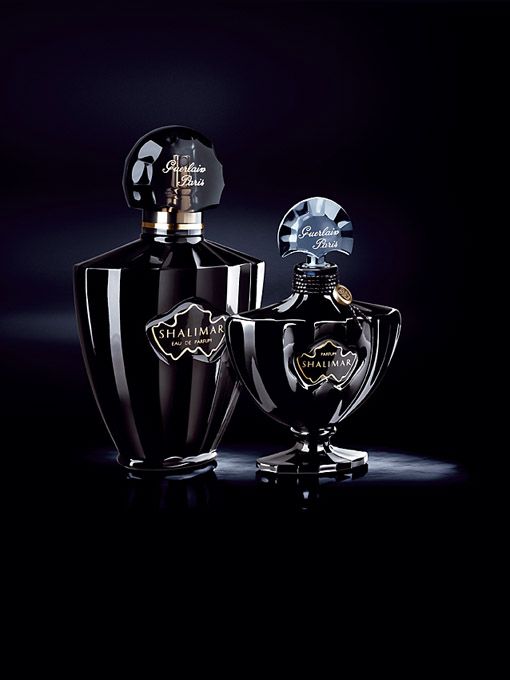
Shalimar by Guerlain: (Gare-lahn) contains bergamot, lemon, and patchouli accented with vanilla, sandalwood and musk. A perennial favorite for every woman in your life.

Musk, when diluted for perfumes, has a sweet smell and is the most powerful of the perfume oils. Musk for perfumes usually comes from the musk–ox or the musk-rat, but the most prized source is the male musk-deer that lives in the Himalayas.

L’Aminant by Coty: (La-mee-naw; “l’aminant” means the magnent) jasmine, citrus, Bulgarian roe, Italian bergamot, Algerian geranium, vanilla from South America, vetivert from East India, and civet musk from Ethiopia.

Dolce & Gabbanna for Women: (Dole-che) petit grain, tangerine, basil, accented with freesia, musk and rose.

Shalimar by Guerlain: (Gare-lahn) contains bergamot, lemon, and patchouli accented with vanilla, sandalwood and musk. A perennial favorite for every woman in your life.

Caleche by Hermes: (Ka-leesh by Air-mezz; ) a subtle combination of rose, gardenia, lilac, and civet musk.

Lagerfeld Sun * Moon & Stars: jasmine, orange blossom and narcisse are blended with notes of musk, sandalwood and amber,

O Oui by Lancome: (Oh-wee) scents of clementine, water lily and musk.
Revlon Ciara: for a young woman, a crowd-pleasing mix of vanilla and musk.

Sporty/clean

Citrus - These are compositions where the inclusion of citrus fruits like lime, lemon, tangerine, mandarin and bergamot (often called hesperides) are blended to create a fragrance that has effervescent or exhilarating qualities. More common in men's fragrances, but increasingly popular in women's, too. One of the oldest fragrance categories, dating back to ancient times.

Example: CK One
Subcategories: Citrus-Floral Examples: Jess

Sporty/Clean

Cashmere Mist by Donna Karan: A blend of bergamot and lily of the valley is merged with sweet tones of vanilla, sandal wood and amber for this fresh, warm scent.

Estee Lauder Alliage: The one that started this category of fragrances in 1972, it blends jasmine, citrus, nutmeg, rose, armoise (it’s French, and I don’t know what it means), oakmoss, vetiver (an East Indian grass), and cedarwood.

Lily Chic by Escada: (Lily Sheek) strong notes of lily of the valley, grapefruit, yellow peony, marigold, sandlewood, starfruit and Lemon Tree bark combine for a fresh, airy fragrance.

Ralph Lauren Polo for Women: sporty, grassy with orange flower and melon, with hints of water mint and freesia.

Tommy Girl by Tommy Hilfiger: a clean, refreshing scent with notes of camellias, apple blossoms, mandarin and spearmint blended with honeysuckle, desert jasmine, and Dakota lily.

Green/natural

Green - These are compositions where the predominant notes are derived from green plant parts and notes such as pine, juniper, grass, leaves, and herbs.
Example: Safari, Bvlgari Extrкme

GREEN:

Chanel No. 5: notes of ylang-ylang (an Asian tree), neroli (a flower oil), jasmine and may rose. Sandalwood and vanilla round out this classic fragrance with an unforgettable woody note. (Named for Coco Chanel’s lucky number.)

Green/natural

Angel by Thierry Mugler: (Tear-ree Moo-glay) a swirl of chocolate, caramel, honey and vanilla, with wooded notes.

Burberrys London: a blend of peach, apricot, sandalwood, cedar, amber and musk.

Calvin Klein Eternity for Women: blend of mandarin, marigold and white lily, lightly touched by amber and sandalwood.

Calvin Klein Escape for Women: blend of apple, mandarin, rose, plum,
peach, and finishes with musk and sandalwood.
Calvin Klein Truth for Women: Woody notes of wet woods and bamboo accompanied by white clover, peony, sapling, sandalwood and white amber. Light enough for casual wear.

Chanel No. 5: notes of ylang-ylang (an Asian tree), neroli (a flower oil), jasmine and may rose. Sandalwood and vanilla round out this classic fragrance with an unforgettable woody note. (Named for Coco Chanel’s lucky number.)

Elizabeth Taylor White Diamonds: notes of Italian neroli, living Amazon lily, Egyptian tuberose, Turkish rose, Italian orris, living narcissus, living jasmine, Italian sandalwood, patchouli, amber, and oakmoss.

L'Instant de Guerlain by Guerlain: (Lan-stawn da Gare-lahn) fresh, crystalline amber is finished with notes of citrus, honey, and magnolia.

Lacoste: a natural scent with notes of pepper, bergamont, ambrette seed oil, heliotrope, jasmine, hibiscus, cedarwood, gaiacwood and musk.

Magnetism by Escada: a charming fragrance of leafy greens, freesia and black currant added to the musky energy of amber, sandalwood and vanilla. Includes top notes jasmine, iris, muget and almond blossom.

O de Lancome: A cool scent: lemon, mandarin, jasmine, honeysuckle, sandalwood and wild rosemary.

Curve by Liz Claiborne: Hints of citrus and water lily with sheer tones of sandalwood.

Poison by Christian Dior: strong scent of jasmine with lower tones of amber, almond and woods.

Romance by Ralph Lauren: A blend of velvety woods, extravagant florals and seductive musk.

True Star by Tommy Hilfiger: with Beyonce as the inspiration, this is an unusual scent that has florals as well as grains: sweet pea, syringa, honeysuckle, rice pudding, kashi cereal, and toasted wheat grains. The ads indicate that this is an Oriental scent, but I think it more properly belongs in the Green category.

Oriental/spicy

Oriental fragrances are common in both male and female fragrances. They are often warm, spicy and sweet and contain ingredients such as Vanilla and Tonka bean. Sandalwood is also very common in these fragrances

Examples include:

Masculine: Obsession for Men by Calvin Klein, Joop! Homme by Joop!, Le Male by Jean Paul Gaultier, Equipage by Hermes, Egoiste by Chanel

Feminine: Jean Paul Gaultier "Classique", Angel, Opium by Yves Saint Laurent

Oriental - Generally full-bodied compositions that create an exotic, warm impression due to the inclusion of ingredients like spices, musk, balsams and resins.

Example: Shalimar, Royal Secret, Contradiction
Subcategories: Oriental-Citrusy
Oriental-Ambery
Oriental-Spicy
Floriental
Oriental-Gourmand Example: Candies

Example: Obsession
Example: Opium
Example: Wings, Hugo Woman
Example: Casmir, Angel, Wish

ORIENTAL:

Chanel Allure: bergamot (a herb), mandarin, water lily, magnolia, jasmine and may roses, vetiver (an East Indian grass) and, finally, velvety vanilla.Coty

Emeraude: introduced in 1923, its blend of jasmine, orange blossoms, and bergamot were exotic and new at the time. Emeraude retains its original charm.

Estee Lauder Youth Dew: Warm and exotic, this classic from 1953 has moss, vetiver and sandalwood are combined with a blend of warm rose, amber and geranium

Chanel No. 19: floral, woody, and green. Notes of neroli (a flower oil), galbanum (a resin from some Asian plants), may rose, and irises from Florence finish with a chime of chypre with a subtle, woody vetiver (an East Indian grass). The number 19 refers to Coco Chanel's birthday on August 19.

Miss Dior by Christian Dior: chypre, sage, gardenia, rose, patchouli, and labdanum. This classic scent is perfect for the office.

Envy Me by Gucci: has a base of sandalwood, musk, and teakwood, with a blend of pink peony, pink pepper, and water jasmine, and middle notes of lychee, pomegranate, pink musk, and white tea.

Michael Kors: freesia, tuberose, blue orris and white peony are topped with Moroccan incense, musk, and vetiver.

Paloma Picasso Perfume: a strong, rich blend of oakmoss, woods, citrus, bergamot (an herb) with notes of neroli (a flower oil) and jasmine.

Prada Perfume: a sophisticated blend of bergamot, orange, rose, patchouli, raspberry, sandalwood and vanilla.

Romance by Ralph Lauren: this sexy evening fragrance has hints of sungoddess rose, marigold, ginger, chamomile oil, yellow freesia, followed by white violet, lotus flower, day lily, and a base of patchouli and oakmoss.

Oriental/Spicy

Amarige by Givenchy: (ah-mah-reesh by Shee-von-shee; “amarige” is a fake French word) this is a sharp fragrance. Fruity notes of melons, peaches and plums are combined with a blend of orange flowers, soft sweet spices, violet and mimosa.

BCBG Girls: (Bay-say-bay-zhay Girls) for a young woman, spicy mandarin is combined with jasmine and clove.

Calvin Klein Obsession: a blend of vanilla, amber, orange blossom, oakmoss and other Oriental spices. Recommended for daytime wear.

Chanel Allure: bergamot (a herb), mandarin, water lily, magnolia, jasmine and may roses, vetiver (an East Indian grass) and, finally, velvety vanilla.

Emeraude by Coty: introduced in 1923, its blend of jasmine, orange blossoms, and bergamot were exotic and new at the time. Emeraude retains its original charm.

Estee Lauder Youth Dew: Warm and exotic, this classic from 1953 has moss, vetiver and sandalwood are combined with a blend of warm rose, amber and geranium.

Lancome Magie Noir: (Mah-zhee Nour, means “black magic”) a bouquet of Bulgarian rose and blackcurrant bud, with notes of jasmine, ylang-ylang (an Asian tree), cedar rose and incense.

Lancome Tresor: (Tray-zore) a modern "floriental" that combines the rose, lily of the valley (the most difficult flower to reproduce in a perfume), and lilac with the sparkle of apricot blossom, heliotrope and iris.

Must de Cartier: rose, carnation, jasmine, jonquil and orange blossom are combined with wooded notes of sandalwood , vetvier and amber.

Organza by Givenchy: (Shee-von-shee) this spicy scent is a blend of gardenia, ylang-ylang and tuberose. At the base are amber, nutmeg, vanilla, cedarwood and mace. It has a sexy bottle, too.

Organza Indecence by Givenchy: (Shee-von-shee) is an elegant fragrance with top notes of cinammon blended with patchouli and jacaranda with a hint of amber and musk.

Still by Jennifer Lopez: a surprising blend of saked, white pepper, mandarin, earl grey, pink freesia, honeysuckle, orange flower, rose, wild jasmine, sandalwood, musk, amber, and orris.

Ysatis by Givenchy: (Ee-sahr-tis by Shee-von-shee) a blend of mandarin, oakmoss, rose, iris, vanilla, clove, and amber.

Opium by Yves Saint Laurent : (Eaves San-la-raun) a refined blend of coriander, clove, and bayleaf accented with vetiver (an East Indian pgrass), pepper, lily of the valley (the most difficult of the flowers to reproduce in a fragrance), amber and patchouli. Very feminine.

Marine/oceanic

The Marine fragrance family is relatively new and is used to describe scents that evoke a feeling of the sea air. An ingredient called calone is used to give the marine scent.

Examples include:

Masculine: Kenzo Pour Homme, L'Eau D'Issey pour Homme by Issey Miyake, New West for Him by Aramis

Feminine: Escape by Calvin Klein, Inis by Fragrances of Ireland, Aquawoman by Rochas.

Labels:

posted by James Higham at 14:30 0 comments

[food prices] comparative world mini study

Sunday, October 21, 2007


List continues from here:

3. Fish, quoting real staple fish in your area, not fish 'n chip shop or frozen:

Safeway Washington 1 LB Croaker Dressed Fresh $3.49 [$7.68]
Jmb [Canada] fish salmon fresh 26.99/kg, froz 22.99/kg, sole or cod 19.99/kg [$20.38]
Julie [Wales] Fish: cod £16.99 per kilo, kippers - £5.99 per kilo [$34.66]
Liz [Wales] Fish (from fishmonger): local sea bass about £12 per kilo, other fish cheaper [$24.48]
Sean Jeating [Europe] a codfish 1 kg = 10 Euro b trout 1 kg = 12 Euro c salmon trout = 14 Euro c halibut 1 kg = 18 Euro d eel 1 kg = 31 Euro [$9.94]
Welshcakes Limoncello [Sicily] Fish –: swordfish - €25 per kilo, anchovies - €7, cod - €15 [$14.91]
James [fSU] Mintai 63.60 roubles/kg [$2.60]
Colin Campbell [Australia] fish salmon fresh 25/kg, basa/ nile perch $10/kg [$9.00]

4. Milk, preferably carton rather than bottle and out of the cabinet:

Safeway Washington Milk: Lucerne Fat Free Milk – Gallon $3.50 [$0.92]
Ruthie [U.S.A.] A gallon of milk at the convenience store is about $2.79 [$0.74]
Jacque LeBlanc now in Sicily [Honolulu prices] While the average may be US $2.74 per half gallon of milk. When I left Hawaii a year ago, we would typically pay US $5 for half a gallon. [$1.32]
Jmb [Canada] milk 1.69/L (cheaper in 2L, 2.89, 4L 4.19) [$1.48]
The Morningstar [England]: 4 pints £1.34 [$1.20]
LFB_UK *The Legend* [England] Milk 1.34 per 4 pints [$1.20]
Julie [Wales] Milk - 59p per litre [$1.20]
Liz [Wales] Milk: £1.34 for 2 litres (more when it's delivered) [$1.37]
Sean Jeating [Europe] milk: 1 l = 0,82 Euro [$1.16]
Welshcakes Limoncello [Sicily] 1 litre carton semi-skimmed milk - €1,13 [$1.60]
James [fSU] 26.80 roubles/litre [$1.09]
Colin Campbell [Australia] milk 1.50/L (cheaper in 2L, 2.90, 3L 3.70) [$1.30]

5. Cheese, which we can agree on, nothing exotic. Perhaps gouda or edam:

Safeway Washington 1 LB Deli Counter Smokey Sharp Cheddar Cheese $7.29 [$16.04]
Ruthie [U.S.A.] I buy cheese in bulk, so I don't think this is representative, but it comes to about $2 for an 8-oz block [$8.80]
Jmb [Canada] cheese Canadian cheddar 15.99/kg, gouda 22.99/kg [$16.30]
Julie [Wales] a medium cheddar - £5.85 per kilo [$11.93]
The Morningstar [England] Cheese: value cheddar £3.79 per kilo [$7.73]
LFB_UK *The Legend* [England] Cheese 3.79 per Kilo [$7.73]
Liz [Wales] Cheese: £3.99 for 500g (Seriously Strong Cheddar - if you're having cheese, it has got be good.) [$16.28]
Sean Jeating [Europe] Gouda 1 kg = 5,29 [$7.51]
Welshcakes Limoncello [Sicily] Cheese: Swiss Emmenthal - €9, 19 per kilo. Mild local cheese - €6,10 [$8.66]
James [fSU] 254.00 roubles/kg [$10.37]
Colin Campbell [Australia] cheese cheddar 15.99/kg [$14.39]

6. Bread, in the form of an oblong loaf, unsliced but if that's not possible - sliced. No exotic forms or from the hot bread bakery - just supermarket bread:

Safeway Washington Buttermilk bread $2.49 [$2.49]
Ruthie [U.S.A.] A loaf of sliced wheat bread at the convenience store here is $1.15 [$1.15]
Jmb [Canada] bread cheapest loaf 1.49 [$1.52]
Julie [Wales] bread - £1.07 wholemeal, sliced [$2.18]
The Morningstar [England] Warburtons Medium white sliced loaf £1.00 [$2.04]
LFB_UK *The Legend* [England] Bread 1.05 Large white sliced [$2.14]
Liz [Wales] Eggs: £1.25 for 6 large woodland [$2.04]
Sean Jeating [Europe] Loaf bread 750 g = 2,60 Euro [$3.69]
Welshcakes Limoncello [Sicily] Bread: Baguette weighing 0, 350 kg - €0,75. Local bread - €2, 60 [$3.69]
James [fSU] 13.80 roubles/loaf [$0.56]
Colin Campbell [Australia] bread cheapest loaf 1.50 [$1.35]

7. Eggs, 12, largish:

Safeway Washington Davidson Large Pasteurize Eggs - 12 Count [$2.04]
Ruthie [U.S.A.] Eggs are anywhere from $1.25 (at the convenience store) to $1.79 (at a different supermarket) for a dozen [$1.51]
Jmb [Canada] eggs 2.59/12 [$2.64]
The Morningstar [England] Eggs £1.19 for 6 large, 79p for 6 average [$4.85]
LFB_UK *The Legend* [England] Eggs 1.70 10 Large eggs [$4.16]
Julie [Wales] dozen eggs - £2.04 large free range, on offer (Waitrose doesn't sell battery eggs) [$4.16]
Sean Jeating [Europe] eggs 10 (large) = 1,60 (in supermarket: 1,29 Euro) [$2.20]
Welshcakes Limoncello [Sicily] Eggs: Never seen any battery eggs here. Local eggs - €0, 81 for 6 [$2.30]
James [fSU] 31.10 roubles/10 eggs [$1.27]
Colin Campbell [Australia] eggs 3.50/12 [$3.15]

8. Coffee, 200g ground:

Safeway Washington Bucks County Coffee Colombia Decaf Ground Coffee - 12 Oz $8.75 [$5.13]
Jmb [Canada] coffee tin ordinary 4.49/300g [$3.05]
LFB_UK *The Legend* [England] Coffee Kenco 4.68 200g [$9.55]
Julie [Wales] coffee- £1.99 [$4.05]
Liz [Wales] Coffee: £3.19 for 454g [$2.87]
Sean Jeating [Europe] coffee 0,5 kg = 4,50 Euro [$2.56]
Welshcakes Limoncello [Sicily] Coffee, 250 gr medium roast, hard pack - €2,05 [$3.63]
James [fSU] 215.00 roubles/250g [$7.02]
Colin Campbell [Australia] coffee tin ordinary 5.00/300g [$3.00]

9. Safflower or sunflower oil, in a plastic bottle:

Safeway Washington Hollywood Safflower Oil - 32 Fl. Oz. $5.98 [$6.32]
Jmb [Canada] sunflower oil 4.99/L [$5.08]
The Morningstar [England] Sunflower oil about 50p per litre for the cheap stuff [$1.02]
Julie [Wales] sunflower oil - 69p per litre [$1.41]
Sean Jeating [Europe] Sunflower oil 750 ml = 2 Euro [$3.78]
Welshcakes Limoncello [Sicily] Sunflower oil is difficult to find here. Corn oil - €1,10 per litre, extra-virgin olive oil, popular brand - €6,41 per litre. Most of the olive oil sold is extra-virgin [$1.56]
James [fSU] 54.90 roubles/litre [$2.24]
Colin Campbell [Australia] sunflower oil 4.00/L [$3.60]

10. Fruit, let's say bananas because there are too many varieties with other fruits and we’ll work on about five medium sized ones to the kilo:

Safeway Washington Banana $0.25/each [$1.25]
Ruthie [U.S.A.] Bananas are 29 cents a pound [$0.64]
Jmb [Canada] bananas 1.52/kg [$1.55]
Julie [Wales] bananas - 93p kilo (Fairtrade) [$1.90]
Liz [Wales] Bananas: 85p a kilo [$1.73]
Welshcakes Limoncello [Sicily] Bananas - €1,69 per kilo [$2.39]
Sean Jeating [Europe] Bananas 1 kilo 2 Euro (today they were reduced: 1,69 Euro) [$2.39]
James [fSU] 25.94 roubles/0.75g [$1.06]
Colin Campbell [Australia] bananas $3/kg price varies [$2.70]

Welshcakes Limoncello [Sicily] also commented:

The price of grain has doubled in Italy in recent years and 1.7% inflation has been noted for September. Bread in Rome is selling at €3,60 per kilo and there is to be an enquiry.
James, you may be interested to know that it is reported here today that the price of bread in a Rome supermarket has risen by 79% in one day!

Jacque LeBlanc now in Sicily [Honolulu prices] also commented:

The average price of a half gallon of whole milk in Honolulu during the first half of 2007 was $2.74, the most expensive in the nation, according to The Council for Community and Economic Research in Arlington, Va. San Francisco had the second-most pricey milk at $2.71 per half gallon. The national average was $1.96 per half gallon. But milk was the least of our price worries in Hawaii, the average median single family home is $650,000.

Sean Jeating [Europe] also adds these annotations:

Prices for all so-called milk products “jumped up” with the beginning of September. Examples:
• condensed milk (340 g) – now: 0,53 Euro – spring: 0,29, Euro summer: 0,39
• milk (1 l) now 0,82 Euro – spring 0,55 Euro - summer 0,62
• gouda (1 kg) now 5,29 Euro – before 4, 70 Euro
”Of course”, so did the heating oil: 1 ltr = 0,65 Euro (2006 = 0,53 Euro) Thus, 3.000 ltr = 1950 Euro (2006: 1590 Euro.

Ah, and as for "hikes": EON announced increasing energy (electricity-) prices; about 10 per cent!! for the end of the year. Their boss said people should not complain. Energy is far (!!) too cheap. Here we go . . .

LFB_UK *The Legend* [England] also states:

Butter has shot up in my local tesco from 3.69 upto 4.18

Colin Campbell [Australia] says :

James, both Coles and Woolworths have online stores, which you can access to check any price that you want. Woolworths you just have to enter a post code. Use the one they suggest and Coles, again you have to enter a post code and test drive. I am very busy. Just bought a house.

Generally a slow and steady increase in basic foodstuffs. The price impact of the drought is being felt in fruit and vegetables and in meat. Overall it seems like prices have gone up about 10 percent this year. Just a perception.

Any comments, please, on the front page here.

Labels: , ,

posted by James Higham at 14:45

[which craft] design considerations continued

Thursday, August 23, 2007


A compromise between purpose, cost and size

What do you want the boat for?

1] Cruiser;

2] Racer;

3] Cruiser/racer;

4] Off the beach, which won't be touched in this article.

Any sort of distance sailing, whether cruising or racing, is going to come down to either:

1] blue water sailing in the form of either long distance [35 to 70 feet unless you're a millionaire];

2] island hopping or overnighters [rule of thumb is 19 to 35 feet on average].

Hull configuration

Vital consideration and the choices are really:

1] Monohull - the traditional "boaty" boat, from dinghies up to keelboats

Most people's idea of a "yacht"

Advantages - boaty feel, slow and sure, beautiful on the eyes, traditional, if knocked over by the wind [a real danger], it can pop up again safely.

Disadvantages - always sails on an angle, keel sometimes falls off and boat sinks like a stone, cramped inside, wet, too slow [unless you're a millionaire].

2] Catamaran - two hulls strapped together with crossbeams

Stable and yet anything but stable

Advantages - utter speed, especially across the wind when it can't be touched by any but the sailing canoe or proa, immense stability allowing it to carry more sail, huge accommodation the larger it gets, sails flat, difficult to flip, utter comfort.

Disadvantages - buries the nose and can flip that way; though ultra-stable, once it does lift, the wind gets under and over she goes. Experiment - place a piece of board against a wall and press against the side. No movement. Now slightly lift the side and watch how easily it flips, once past a certain point. Also, people tend to take advantage of the huge accommodation and overload it so it becomes an unstable tub. It can give a hard ride as it crashes through the water, rather than rides over it. Has problems turning.

3] Trimaran - one largish hull and two smaller hulls, one either side

Fabulous cruising boat, immensely stable

Advantages - pound for pound, possibly the best configuration for the sea. Immensely stable, even under severe pressure. Experiment - take a soccer ball and try to push it under a bath full of water - that's trimaran stability. Slightly less speed than the cat across the wind but does better upwind and has the beauty and other advantages of the monohull and cat. Turns on a sixpence. Roomy feel to it overall. Lovely boat.

Disadvantages - cost [3 hulls, not 2 or 1], more sail needed for the heavier weight, narrow hulls make it the worst for accommodation, with a modern western rig is unbalanced fore and aft [front to back] and can dig in and flip this way, can be wet.

That's as far as the west usually goes but there are still other configurations from the east:

4] Proa - one narrow two direction hull with an outrigger

This boat goes forwards and backwards alternatively

Advantages - out and out speed with only one hull sailing upright and a long weighted log balancing it out to windward, sheer thrill.

Disadvantages - needs an athletic crew, constantly on the alert, to balance it and the optimum sail plan for it involves fiddling about every time it turns. Great day sailing boat but not much chop for cruising unless you have a large crew. Messy steering and messy sideways movement prevention too.

5] Outrigger canoe - like the proa but sails only forward

A crab claw rigged outrigger canoe

Advantages/disadvantages - depends on the configuration of the smaller hull. If it is just the right weight and size, it gives great stability like the tri in one direction but acts like a proa/cat in the other. So you'd go like the wind, constantly attending it in one way but on the other could set and forget.

Some people don't like the asymmetrical nature of this - it's personal preference and it militates agaist modern western thinking which likes "dial-in" power and everything minutely under control. Outriggers are more natural boats, suited to waves and requiring good sailing skills.

These configurations are the only really practical choices available.

Sail plan

Ho, ho - where do we start? The dispute of ages here.

1] Old square riggers

"Surprise" steaming along on full power

Well, all right - beautiful ships, beautiful but not immensely practical today. Excellent for long voyaging if following a path with the wind behind the whole way, useless into the wind and the advantages replicated by the Junk [below]. Tall masts which frighten the hell out of you if you have to go up to take the sails in - brrrrr, I'd prefer not, thanks.

2] Space age wing masts

The one on the left, Cogito, is the fastest multi-directional sailboat on the planet

Heavy, hideously expensive but immensely powerful and can't be touched, especially downwind. Racing only as there is a thig called reefing [shortening the sail when the wind gets up] and this solid wing can't be reefed. If you have a million dollar sponsor and intend to sail only on light afternoons, then this is for you.

3] Modern Bermudan

Extreme Bermudan, only good upwind - I sailed this class for some years

I hate them. OK - let's be fair. The modern western Bermudan is unchallenged into the wind and almost flat across the wind and has been designed for racing round courses which favour upwind sailing. I had one in extreme form - an A Class catamaran and it sure was efficient until it went downwind.

It is top-heavy, places immense stress on the hulls and rigging, has a leaning-over disadvantage, is expensive with modern materials [putting sailing into the rich-boys category] and upkeep is constant and expensive. On a long distance voyage, I'd not use it.

4] Gaff and 5] gunter rig

Gaff rigged cat, showing lower centre of effort and greater stability

The former can be seen in the cat here and the gunter in in the Mirror dinghy here. The gunter is virtually a Bermudan, with its advantages but the gaff is another thing.

This is the rig which followed square riggers and was itself replaced by the Bermudan in the 50s. Modern westerners snort at the old fashioned woodwork, the lines and cords [forgetting the immense number of lines on modern Bermudans] and how it can't touch the Bermudan to windward.

The gunter rigged Mirror Dinghy


Old timers in gaff riggers quietly go about their business and actually sail away from the Bermudans across the wind and with the wind behind, where any sane person would prefer to sail anyway [they think]. The Bermudans call after them; "Yeah, you can't do that into the wind, can you? We'd kill you!" to which the gaff sailor smiles: "Why would I want to?"

Quiet ride, comfort, lower centre of gravity meaning greater stability, less stress on rigging and easily lowered in a storm, this is the western cruising sailor's best choice.

6] Sloops, 7] cutters and 8] schooners

Sloops are the standard these days

A yacht with a large rear sail and a smaller front sail is generally known as a sloop. It's an efficient rig and the little front sail helps out of all proportion to its size. This is most people's preferred choice. Easier to handle, it does the job in short sailing.

Cutters are close to the optimum cruising rig

Cutters have two or even three sails out front and this has the effect of having smaller areas [easier to handle] and a more even spread down the length of the boat - it's a wonderful cruising rig. Not much use for short sailing.

Not strictly a schooner but close enough

Schooners are the big boys - two, three or four masts, sail everywhere, they're so beautiful and in the old days were the speedsters of the yachting world. For me, this is what sailing is all about - traditional beauty combined with power. You have two million dollars to buy one?

Those are the western rigs but hang on one moment - we haven't looked at the eastern rigs yet.

9] The lateen, dhow, whatever you want to call it

Disadvantage is the bit forward of the mast

One of the oldest, most simple and easiest. Good but not great sailing characteristics, it is cheap and does the job nicely. Downside is the non-reversibility on the other tack [when you change direction].

6] Crab claw

Generates huge power offwind

Beloved in the south seas on proas, it has immense offwind and across wind ability at a large range of attack [meaning it matters less, unlike western rigs, where the sail is actually pointing]. It goes like a bullet. Downside is that it can't be reefed in a storm [lines can be pulled across it to reduce speed] and it can blow out. It's also poor upwind.

7] Junk rig

Each panel individually controlled

The traditonal Chinese sail, it has huge advantages and disadvantages. On pure "cruisability", it has no rival. Nothing sticking out the front or sides, it is mild mannered, doesn't flap to death in a storm and is the quickest reefed sail imaginable on whatever angle you happen to be. If your crew are not keen sailors, this is possibly the sail to calm them down. It gives confidence. It's also the softest on the rig, placing no great stress at any point [cf. the Bermudan] and can therefore be made far more cheaply. It is lower aspect and therefore more stable.

Downside is that it is a bit slow, uses a lot of lines and though excellent downwind [like the old square rigger], it's not much chop across or upwind. Junk sailors don't care about that. They have all the time in the world to get where they're going. Great cruising sail.

There are other sails but these are the main choices today.

So - what to choose?

An issue I've been grappling with for years. I've designed everything imaginable, even hydrofoils and the central point is that everything in the end is a compromise between clashing parameters. So here's a sketch in the picture below of my boat [at this moment of thinking]:

Click pic for a better view

Notes

1] It needs to go from the Mediterranean to Britain, out to sea but not in the huge lumping seas of the southern oceans - on average, it needs to handle up to thirty foot seas. This gives it a length of 37 to 53 feet, so let's compromise on 47.

2] I have virtually no money so it would have to be constructed to a simple design, from wood, in an Eastern European country with a seaboard. The rig would also have to be el cheapo.

3] My configuration then, despite it being primarily a south seas design, is the outrigger with high freeboard [space above the water line] and the outrigger [ama] must have accommodation and store all the heavy items - water, for example.

4] The main hull must be long and thin at the water line but flared into very broad at deck level to prevent splashing - it must be a dry design. It has to have a hard cover for the sailing station so as not to freeze to death. It must be sailable by one.

5] Multiple accommodation is irrelevant to me. There'll be one "nuclear family" and me or my girlfriend and me or something similar. There'll be one double, a three quarter bed for me and a smaller twin for children.

6] Privacy, on the other hand, is paramount and this is coupled with discrete, sealed compartments all the way along, each completely cut off from the other and various sealed spaces all over the place. This makes for a simpler and therefore cheaper build.

7] My own bed area is in the centre of the small hull, with a storeroom for loose items up front.

8] Toilet is at the rear of the small hull, doubling as a washing area with privacy from blinds. Main living area/galley is simple - epoxied ply bench with cushions. Weight is therefore so much less.

9] Cutaway ends to the boat are for lightness and better handling. All crossbeams are hand tied so they can be untied in an emergency. Simplicity. Ditto the deck planks [epoxied for strength] - they sit on tied beams, connected by webbing and can collapse and roll up in a storm.

10] Rig - decided on crab claws in the end so I could carry less sail overall, with fewer lines. They are reefable [unusual in this plan] by means of a shorter gaff which sits on a pull-outable levered base [too complicated to explain but I've checked it out].

They have immense power, except upwind but I don't want too much upwind. Their centre of effort is low. I placed them against Bermudan and Junk in diagrams and though the Junk reefs more easily and the centre is just as low as on my rig, mine is still carrying full sail. When mine is on its last reef, it's virtually on the deck.

11] Cutaway shoal keel eliminates the need for retractable boards and holes in the hull and rudder is protected. Simple again. Run aground, hit somethng underneath, e.g. a whale and the keel takes the brunt.

12] Crossbeams extend past the sides of the boat so that hitting anything like another boat or a harbour wall would hit the ends of the beams and not the boat itself.

Two negatives

1] Firstly, the nature of an outrigger makes one tack [angle against the wind] lively and requiring concentration and the other is OK. but we can get round this by reducing sail on the lively tack.

2] Secondly, I don't like the rear mast on that angle but there's no choice if it is going to allow full tacking plus the rear sail must lay down near horizontally to provide horizontal thrust forward. The other sail is then for trim. Not beautiful but the overall sail plan is pretty.

I've thought it through and imagined anything coming at us on a voyage with this configuration and think perhaps it's all covered. A westerner might not like the primitive nature of the boat but I'm more interested in its effectiveness and low cost.

Labels: ,

posted by James Higham at 15:38 0 comments

[hewlett packard] dangerous place for a woman

Tuesday, August 14, 2007

...

Trouble arrives [from the front page]

As the head of an $80 billion company, [Carly Fiorina] also has been held up as an icon to women in business - a label she has refused to embrace. In interviews, she has always said that leadership skills are gender neutral, and asked to be judged on her performance, not her sex.

Yet she became front-page news - and a frequent cover story for business magazines - not so much because people cared about server- industry market shares, but because she epitomized an alluring, controversial new breed of chief executive officers who combine grand visions with charismatic but self-centered and demanding styles.

A classic situation of directors voting for style over substance, as in some ways Britain did in 1992 with Tony Blair and his vague promises and charisma, over the staid John Major.

Fiorina herself was determined to correct the impression and:

… aggressively reorganized H-P's business units in her first year, then dismantled some of those changes when they created unexpected snags. She was forced to lay off 6,000 employees, about 7% of the work force, in 2001, as the economy stalled. It was H-P's largest layoff ever and deeply jolted morale.

Her first major move, according to a Feb. 2001 article, was to restructure:

Until last year, HP was a collection of 83 independently run units, each focused on a product such as scanners or security software. Fiorina has collapsed those into four sprawling organizations.

Without going into detail, the theory was that:

The new structure [would] boost collaboration, giving sales and marketing execs a direct pipeline to engineers, so products are developed from the ground up to solve customer problems.

She also tried to boost creativity across the company, commendable but unfortunately, in doing so, she also made some errors:

1] With her "back end, front end" structure, accounting procedures became transparent but it also made it impossible to pinpoint who was productive and who wasn't. A business school management idea was applied to a major company with disastrous results in accountability;

2] By reducing divisions of a company this size to four streams, she was better able to maintain personal control and fell into the classic error of briefing her closest aides but leaving the lower echelons floating in a very uncertain new management structure during a period of deep unease for the company;

3] As things went wrong for her:

… she became more brittle in confrontational settings, seldom giving ground, staying focused on facts, but doing little to warm her audiences.

Who was at fault?

Remember that HP was a culture thick company and as such, any changes had to be handled with compassion and tact. Not many businesswomen at that time nor even today, at that level, are noted for the quality of compassion or tact.

While it's tempting to lay the blame at her door, the directors plus the family itself must shoulder a large portion for their role in promoting a woman who was wholly wrong for a company with this sort of corporate culture.

Psychologist Michael Maccoby has called such people as Fiorina "productive narcissists", arguing that in the right settings, they can accomplish great things. In the wrong environments, he wrote, such leaders fail.

To put it in layman's terms, she was:

1] full of her own abilities to solve every problem personally and expected personnel to fall into line with her ideas;

2] full of new notions and her own terminology for it which required "selling" to the personnel but she had not the gift to do that;

3] possessed of the knack of being abrasive and getting people's backs up, rather than winning their trust and loyalty;

4] trying to cajole and bully a major company with an established culture without first embracing that culture and trying to change it from within, relying on her love of the company ethos to carry her through.

In other words, she was a poor manager, as her successor also turned out to be. The crunch came with the Compaq merger and the legal battle thereby unleashed:

Halley Suitt, writer of “How To Become An Alpha Male In 18 Easy Lessons” and successful CEO of a start-up company

The end

Originally a $25.3 billion deal, announced just after Labor Day, the merger was so hated that investors erased 19%, or nearly $5 billion, of H-P market capitalization within one day of its announcement.

Walter Hewlett, the son of one of the co-founders of the Silicon Valley giant and a board member, watched in horror as H-P's stock declined even further and he decided to act. He [let] the CEO know that he would vote against H-P's planned merger with Compaq Computer Corp.

She ended up winning the proxy wars and the merger went through - it had to, on pain of huge penalty clauses - and now her neck was riding on her making a go of the deal. Bad luck in the market generally did not help her cause. As one report at the time stated:

With the merger falling short of expectations, Ms. Fiorina has repeatedly been on the defensive. Over time, that has grated on some H-P managers, causing them to jump ship and join competitors. Ms. Fiorina has said that she doesn't believe H-P has lost many valuable executives in the process.

Her own attitude to the personnel of the company couldn't be clearer than in this last statement. What brought her to her final undoing though was trying to defend the indefensible. The stark statistics said that:

1] in Lew Platt's seven year stint, sales had gone up 293%;

2] since Carly Fiorina's arrival, stock had dropped by 53%

Different decades, different measures, stocks and sales but still - it was enough to seal her doom. By this stage, it was all rearguard action to preerve her position. In an interview, she answered the charge in 2] above this way:

Now we're in a period where we've integrated the company and over the course of the last two and a half years have produced two billion more in revenue than analysts predicted. But it hasn't been consistent performance quarter over quarter. So now we have to execute.

She was now being consistently ravaged on two counts - the figures and her attitude to staff. First the figures:

After weeks of promising that HP would meet its quarterly numbers, Fiorina got grim news from the finance department. While sales growth beat expectations, profits had fallen $230 million short. The culprit, in large part, was Fiorina's aggressive management makeover. With HP's 88,000 staffers adjusting to the biggest reorganization in the company's history, expenses had risen out of control. And since new computer systems to track the changes weren't yet in place, HP's bean counters didn't detect the problem until 10 days after the quarter was over.

Her reaction:

At an emergency meeting Sunday, Fiorina told analysts she was raising HP's sales growth target for fiscal 2001 from 15% to as much as 17%. "We hit a speed bump-a big speed bump-this quarter," she said in a speech broadcast to employees a few days later. "But does it mean, 'Gee, this is too hard?' No way. In blackjack, you double down when you have an increasing probability of winning. And we're going to double down."

Blackjack?

Doing it all over again

Why they appointed Patricia Dunn after that is not hard to explain - they were still dazzled by FemBiz but it ended the same way:

On September 5, 2006 Newsweek published a story revealing that the chairwoman of HP, Patricia Dunn, had hired a team of independent electronic-security experts that later spied on HP board members and several journalists, to determine the source of leak of confidential details regarding HP's long-term strategy in January, 2006.

No one wants to say it and she herself vigorously denies it with her talk of management being "gender neutral" but it's not gender neutral on a number of counts:

1] There is a far shorter tradition for women in management and en masse these are basically the pioneers in the field in this single generation - they're clearly going to make mistakes because they don't have generations of businesswomen before them;

2] A woman is not a man. She will therefore attract resistance not only from sections of the male populace but from her own gender as well. With a man, gender is less of an issue, whatever the feminists say;

3] Aggressive business columns asking "Are women better managers?" and so on, citing their people skills and more consensus based team approach but the man's top-down hierarchical and anachronistic methods does precisely what Carly Fiorina claimed it didn't - it turns it into a gender issue. This gets backs up.

4] Far from being the gentle, consensus type manager such as Lew Platt, most of the women clawing to the top posts are a type. Aggressive enough for the job, yes. Hard enough inside?

Whom to measure Fiorina and Hunt against?

Well that's the crux of the matter. Both Fiorina and Hunt, when compared with the Morgans and Carnegies are hard in the boardroom but under extreme pressure become brittle and resentful - Oprah Winfrey, though not a businesswoman per se, is an example.

It's pointless saying that so many men are hopeless managers because I know it. I see it every day but Fiorina must be compared to the Morgans and Carnegies, not with the mass of miinor male managers out there who have reached their level. Fiorina was playng for the top rung and must be measured against that.

Such women as this not only lack warmth but they are not capable of dissembling enough to make it appear they care. Agatha Christie, a successful woman herself, said, through Poirot:

"Women are never kind," remarked Poirot, "Though they can sometimes be tender." [“After the Funeral”, 1953]

Don't forget the card Sarkozy, himself no stranger to passionate outbursts, played in his debate with Royal:

Sarkozy: Calm yourself, Madame.

Royal: No, I will not calm down.

Sarkozy: You need to be calm to be president of the Republic. . . . I don't know why Mrs. Royal, who is normally so calm, has lost her cool.

Royal: I have not lost my cool! I am angry, sometimes it is right and healthy to be angry. The president of the Republic should be angry at injustice.

Sarkozy: You fly off the handle very easily . . .

Women best in start-up companies

Why this obsessed madness to prove someone is something he or she is not? I believe there are many companies in which women under less pressure can excel in. My own step-sister runs a string of craft shops and don't laugh at this - she turns in quite a nice revenue, thank you very much.

The thing is, the company is hers. She started it, just like Halley Suitt above. she developed its culture. My other step-sister ran a printing business and helped set me up. She was everything a manager should be - helpful to a fault but gently insisting on product after a certain time. She's very big in Zonta.

These are two great businesswomen in companies such as theirs.

But HP is not such a company - it's an Alpha male jungle where only a powerful, compassionate, virtually all-knowing CEO, with generations of expertise behind him and "clubbable contacts" can make the cut.

Labels: ,

posted by James Higham at 06:22 0 comments